
The 50/30/20 Budget Rule: How to Manage Your Monthly Salary in India
Learn how to manage your monthly salary using the 50/30/20 budgeting rule. Discover how to divide your income between essential expenses, lifestyle spending, savings and investments with practical examples for Indian households.

Image credit: Finlaxi
Managing money effectively is not just about earning more. It is also about making informed decisions about how much to spend, save, invest and allocate toward financial goals. For many salaried individuals in India, monthly expenses such as rent, groceries, transportation, EMIs, subscriptions and lifestyle purchases can consume a significant portion of their income. Without a clear budget, it becomes difficult to understand where the money goes and how much is available for future financial goals. One simple approach to organizing your finances is the 50/30/20 budgeting rule. It divides your after-tax monthly income into three broad categories: needs, wants, and savings or investments
What Is the 50/30/20 Budget Rule?
The 50/30/20 rule is a budgeting framework that recommends allocating:
- 50% toward needs: Essential expenses required for everyday living.
- 30% toward wants: Lifestyle expenses and discretionary purchases.
- 20% toward savings and investments: Money reserved for financial security and long-term goals.
The framework provides a starting point for managing income rather than a strict financial requirement. Your allocation may need to change depending on your income, city, family responsibilities, debt obligations and financial priorities.
How Does the 50/30/20 Rule Work?
Consider an individual earning ₹60,000 per month after taxes. Using the 50/30/20 approach, the monthly income could be allocated as follows:
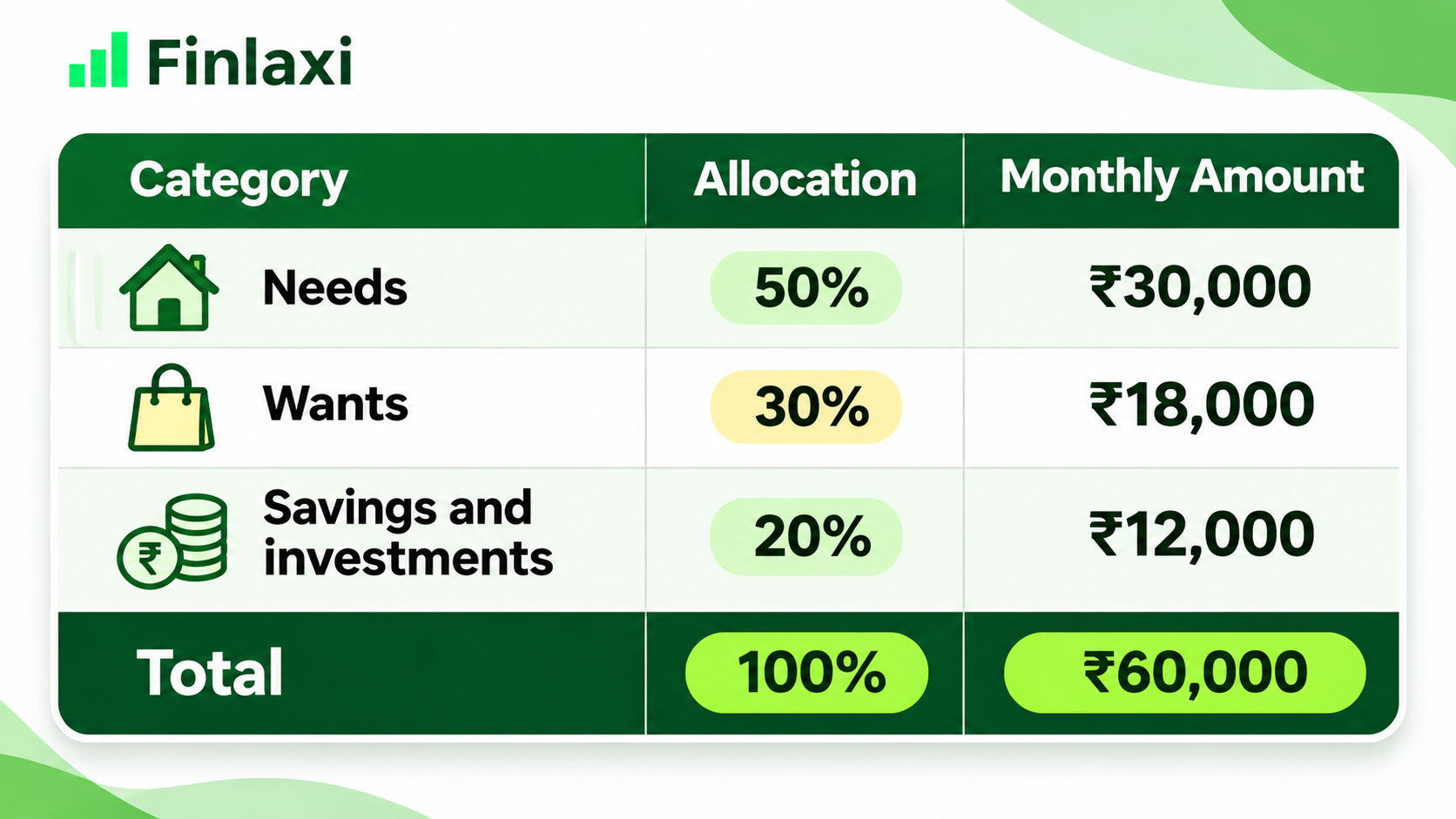
Image credit: Finlaxi
The objective is to establish a consistent savings habit and gradually improve the allocation as income increases or expenses decrease. Even a small, regular contribution can help develop financial discipline.
5 Practical Ways to Follow the 50/30/20 Rule
1. Track your monthly expenses
Record your spending across rent, groceries, transportation, EMIs, shopping and entertainment. Reviewing expenses helps identify areas where you can reduce unnecessary spending.
2. Automate your savings
Transfer a predetermined amount into a separate savings or investment account after receiving your salary. This reduces the temptation to spend money that should be reserved for financial goals.
3. Review subscriptions and recurring payments
Small monthly payments can add up over time. Cancel services you rarely use and review recurring charges regularly.
4. Avoid unnecessary borrowing
Credit cards and personal loans can make lifestyle spending expensive when balances are not repaid on time. Prioritize repayment of high-interest debt and avoid borrowing for unnecessary purchases.
5. Review your budget every month
Your expenses and financial priorities may change. Review your allocation regularly and adjust it when your income, responsibilities or financial goals change.
Common Budgeting Mistakes to Avoid
Even a simple budgeting framework can fail if it is not followed consistently. Watch out for these common mistakes:
- Treating savings as whatever remains at the end of the month.
- Ignoring annual expenses such as insurance premiums and maintenance.
- Using credit cards to support spending beyond your budget.
- Investing without considering emergency savings and insurance.
- Setting unrealistic savings targets that cannot be maintained.
- Failing to account for inflation and increasing household expenses.
Final Thoughts
The 50/30/20 rule offers a practical starting point for individuals who want greater control over their monthly income. By separating essential expenses, lifestyle spending and savings, it becomes easier to understand financial priorities and make better money decisions. However, successful financial planning is not about following one percentage for everyone. It is about creating a sustainable budget that reflects your income, responsibilities and long-term goals. Start with what you can comfortably save, track your expenses and gradually improve your financial habits. Consistency and informed decision-making are more important than achieving a perfect allocation from the beginning.
Disclaimer: This article is for educational and informational purposes only. It does not constitute personalized financial, investment or tax advice.
Tags